
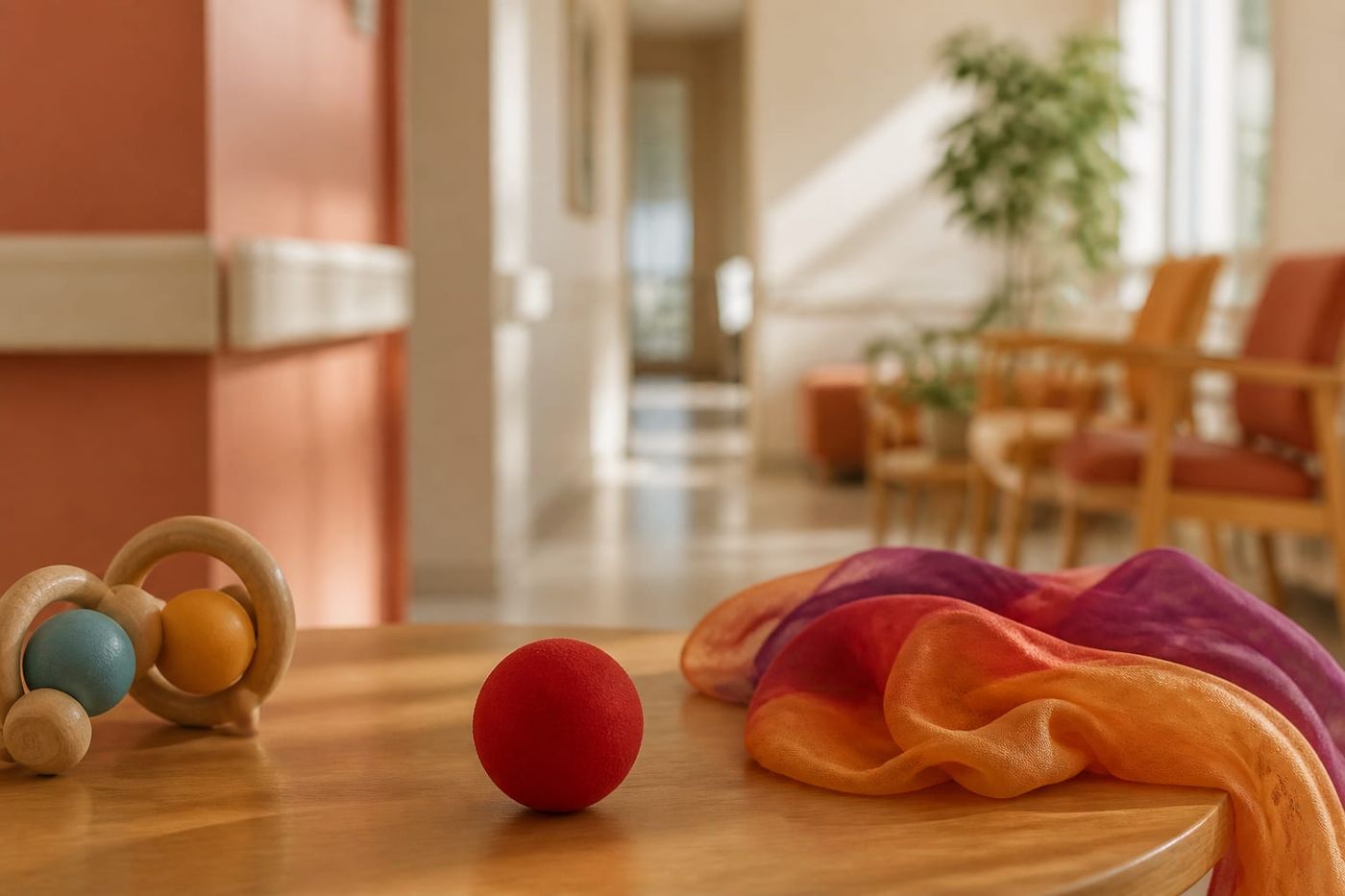
Clinical clowns are a specialised professional practice that takes place in healthcare, rehabilitation, and care settings. Their aim is to support the psycho-emotional experience of people who are hospitalised or under medical observation. This is not simple entertainment, nor an attempt to artificially “lighten” a difficult situation. It is an intervention that uses humour, play, improvisation, music, bodily expression, and relationship — with respect for the setting, the person’s age, mood, and limits.
A clinical clown in a hospital room is not there to cancel the seriousness of hospitalisation. They work alongside care, opening a different psychological space in an environment often organised around tests, waiting, medical instructions, and bodily procedures. Where a person can easily feel reduced to the role of “patient”, play and humour can restore a sense of subjectivity, choice, and participation.
From a psychological point of view, humour can regulate anxiety, awkwardness, and tension. It does not erase difficulty, and it does not replace medical or psychotherapeutic care. It can, however, change — even briefly — how a person relates to what they are living. Through a safe, sensitive interaction, the body may soften, the breath may change rhythm, attention may shift, and the environment may feel less threatening.
In paediatric care especially, clinical clowns can reduce anxiety before or during medical procedures, help a child cooperate with staff, and indirectly support parents or carers, who often live the hospital stay under great emotional strain. The value is not in making the child “forget”, but in offering a way to stay active, relational, and present in a situation that can feel foreign or restrictive.
Therapeutic humour needs tact, training, and ethical awareness. Not every moment is right for play. People do not respond in the same way, and no humorous element should be imposed. The clinical clown must listen to the room, read non-verbal communication, respect refusal or withdrawal, and work with medical and nursing staff without interrupting clinical care. This is also the bioethical core of the practice: protecting dignity, consent, privacy, and psychological safety.
It matters to separate therapeutic humour from ridicule, forced optimism, or the urge to cover distress with something pleasant. Humour that belongs in care does not diminish the other person’s experience, comment on their body, demand joy, or imply that a positive mood is a duty. It creates space for flexibility, spontaneity, and human contact, without denying the reality of the situation.
Clinical clowns remind us that care is not only about treating symptoms, but also about how a person experiences themselves in a vulnerable period. Used with professionalism and respect, humour can become a language of connection rather than a defence against difficulty. It can be a small shift from passivity toward participation, from tension toward breath, from isolation toward relationship.
The value of clinical clowns lies in that subtle shift. They do not introduce humour as a counterweight to the seriousness of care, but as another way to protect the human dimension of a clinical environment. They remind us that the person who is hospitalised is not defined only by diagnosis, treatment, or procedures, but remains a person who needs relationship, choice, expression, and dignity. Here humour is not an escape from reality, but a form of presence that allows care to become more human.
Food for thought
Can humour, used with professionalism and respect, help restore a person’s sense that they remain a person — and not only a recipient of care?